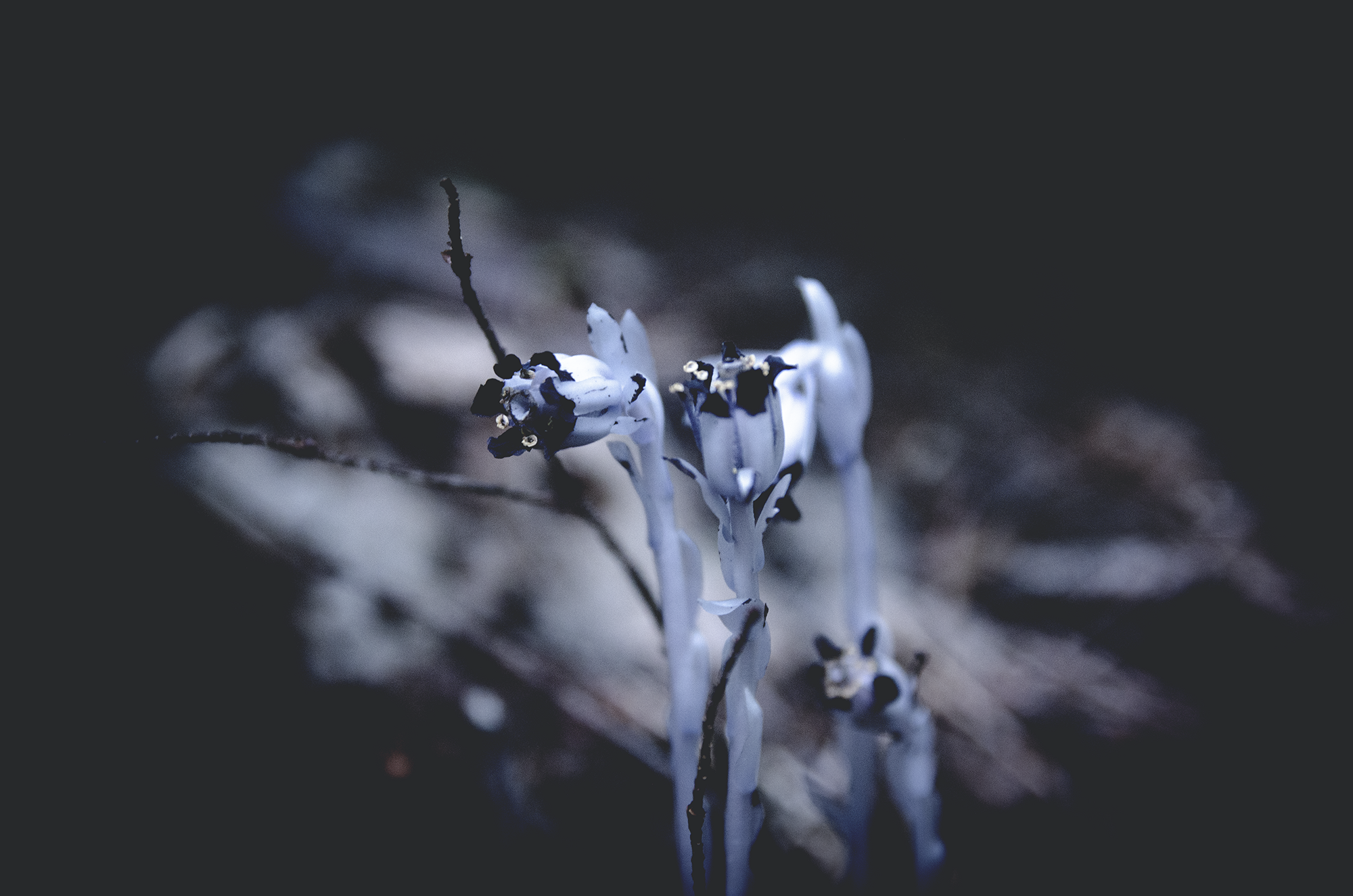
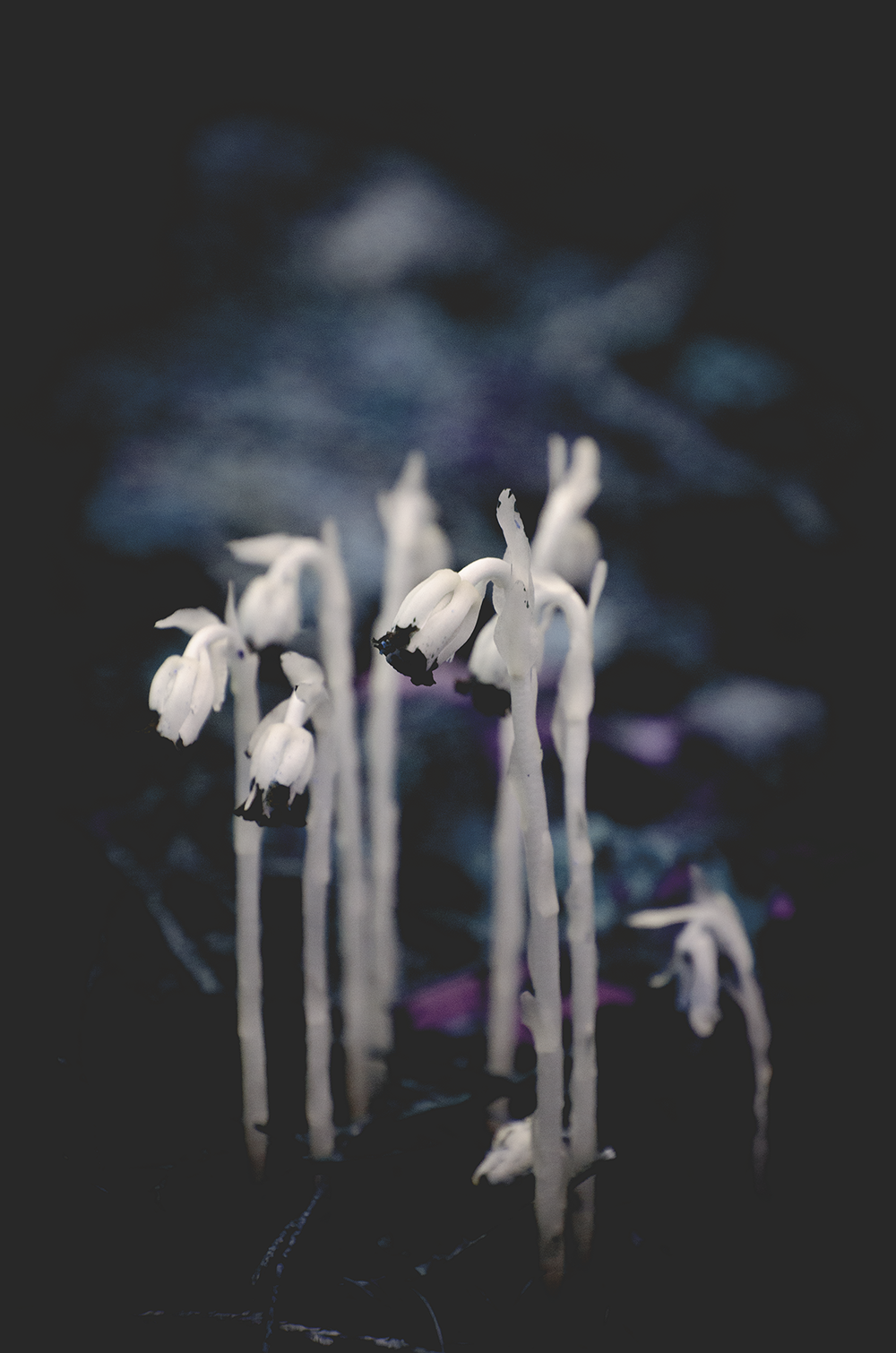
Ghost pipe
Monotropa uniflora
Ghost pipe
Monotropa uniflora
Seated in the mossy understory of the pacific northwest forests, you may find a curious mushroom like plant that looks ghostly amongst its neighbors. This is monotropa uniflora, commonly known as the ghost pipe, or corpse plant. It isn’t a mushroom, it is a flower, a parasitic flower. One that doesn’t produce chlorophyll, it doesn’t get its energy from the sun, but gets energy from taking energy from the mycorrhizal network from fungi. The lack of chlorophyll is where its ghostly white visage emerges from.
An ethereal plant, a rare occurrence to find ghost pipe, let alone stumbling upon several patches in the same area. An ephemeral flower, similar to Trillium, having a very short life span and is difficult to cultivate due to requiring a very specific environment to grow. I traverse the forests of the pacific northwest often, and I’m always thrilled to see both Trillium and Ghost pipe. Though I tend to see ghost pipe less frequently, it feels like a treat when I come across a patch.
What stands out to me about ghost pipe, other than its pure white visage, is its incredible deep purple hue during tincturing. This signature is striking and alludes to the nature of the ajna chakra. The ajna is a higher chakra that’s associated with the third eye, which deals with things that are associated with the dream world, imagination, ESP (extrasensory perception), and intuition. Utilizing this plant could signify we might be working with issues relating to this area.
Rather than seeing this plant as something that enhances the third eye (“opening the third eye”), it seems to work in ways that the ajna has been affected. Such as having a “bad trip” through the use of psychoactive drugs. Or things that have distorted reality and caused a sort of psychosis. Or even in an acute sense, this could apply for anxious and repeating thoughts that seem to be haunting an individual. It appears to give relief to this state of sensory overwhelm in order to bring some clarity to the situation or order for the individual to process the information.
What I’ve learned about the nature of herbalism is that it cannot be exclusively utilized in a biological sense, or exclusively in a spiritual sense. I don’t think it’s necessary for us to truly know “why” or “how” plants work the way they do. I think to grasp a plant from a strictly scientific, biological view doesn’t do the plant or us any service. I do think the same when we see plants as solely spiritual in nature and utilize them solely on intuition and feeling. To engage with herbal medicine, you must have a well rounded spiritual and corporeal way of interacting…, or else you lose the essence of the medicine. I feel this is a hard concept to grasp in the modern age, especially since we like to segregate the mind and the spirit so readily. Art, spirituality, science, all need to be enmeshed to understand herbalism. Ghost pipe is a plant that speaks to this nature strongly to me.
I must advise those who come across ghost pipe, be careful of harvest, please be careful. I see the potency and curiosity of this plant, I don’t want to discourage those who are curious to not engage with it. It is rare, treat it as such. Here are some of my personal rules for harvesting –
Don’t harvest from a single patch. Do not harvest a whole patch. Only harvest from an abundance, never take more than one or two stems from a patch. This way of harvesting is rare in itself, which is why I’ve rarely harvested this plant and will not use it towards any of my mainstay herbal tinctures. If you do harvest, be respectful, and make sure you tincture quickly because it will not be effective if it starts to bruise.